The Iceberg Model
What are you reacting to?

What are you reacting to?
Events, patterns, structures - which are you reacting to?
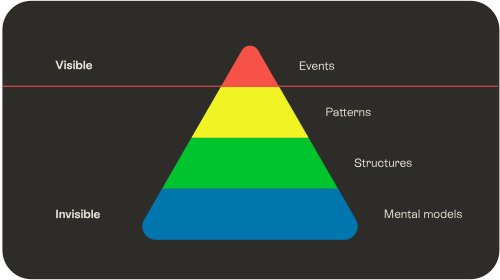
Most of what we react to at work is just the tip of the iceberg - the single event in front of us. But the event is rarely the whole story. Underneath it sits three more layers, each one further from view and closer to the actual cause:
When’s the best time to use this tool?
How to use:
Step 01:
Name the event. Write down exactly what happened - just the facts, no interpretation yet.
Step 02:
Look for the pattern. Has this happened before? How often, and under what circumstances?
Step 03:
Ask what structure produces it.
Step 04:
Surface the belief underneath.
What would have to be true - or seem normal - for that structure to exist unquestioned? This is the layer most people never reach, and it's usually where the real change has to happen.
Why we love it:
Most managers spend their time firefighting events, which feels productive but rarely changes anything. The Iceberg Model forces you below the surface - to the pattern, then the structure, then the belief holding it all in place - so you're solving the actual problem instead of responding to its latest symptom.
The event is just the tip. The real problem is usually a few layers down.

Our community newsletter sparks curiosity about the world around you and challenge your thinking. Sound good?
